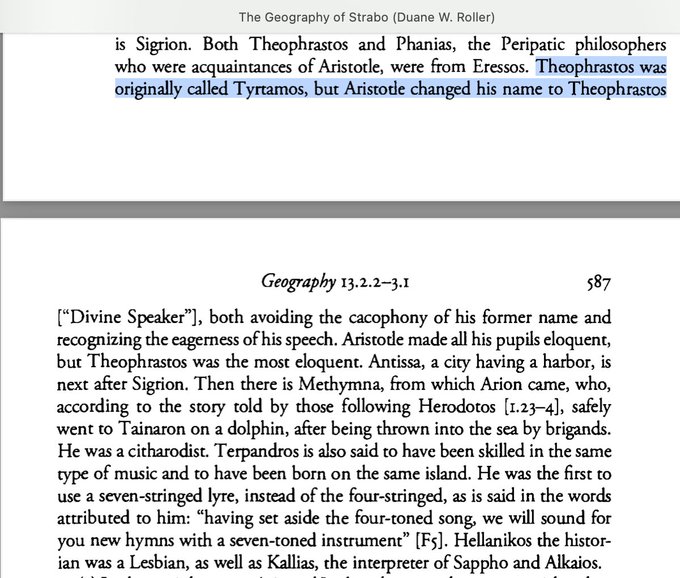
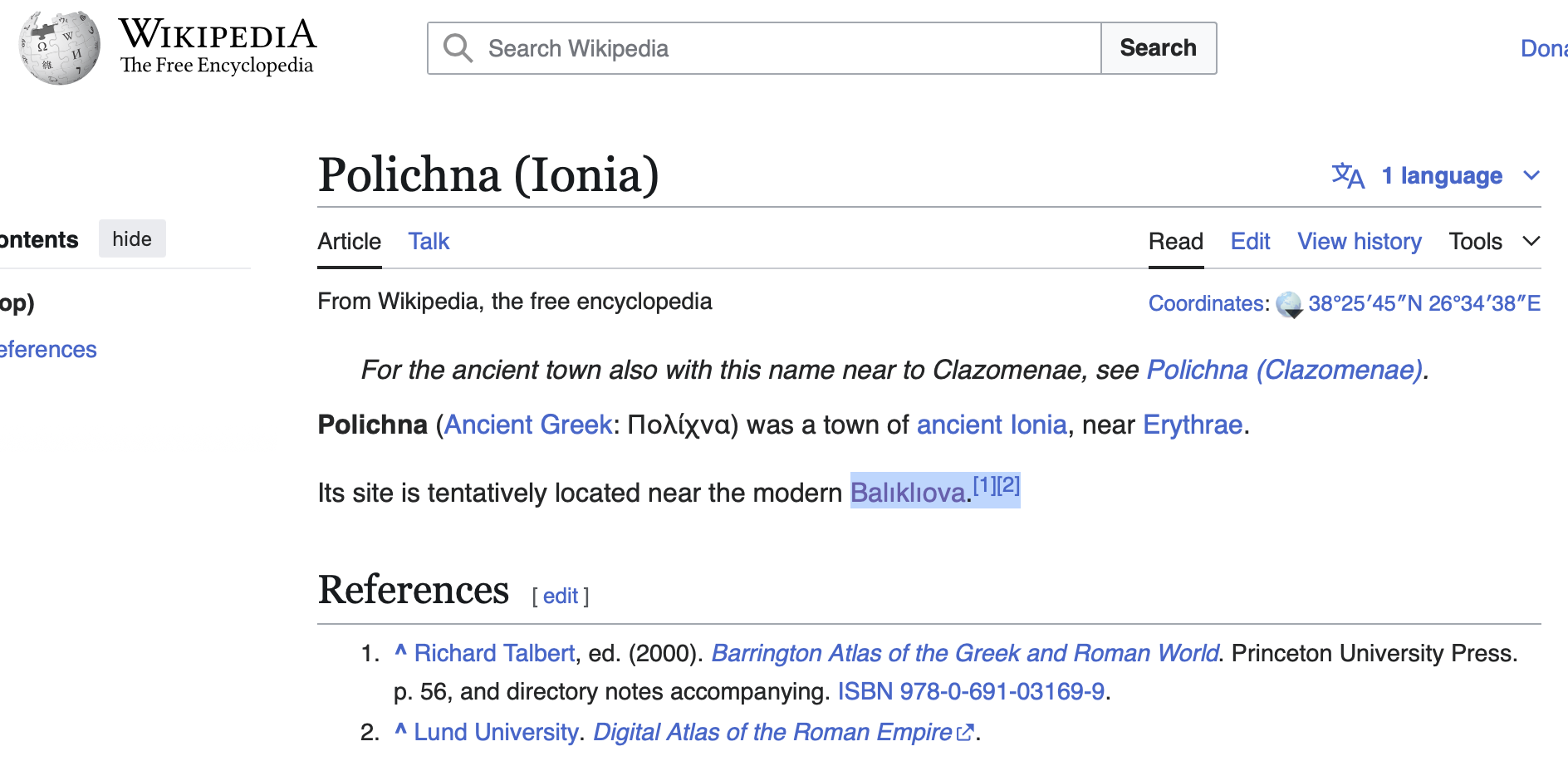
|
A list of words that could have a Türkic etymology in Strabo's Geography:
*
Strabon'un Coğrafya'sında Türk kökenli olabilecek sözcüklerin listesi:
by Uzunbacak Adem!
*
See the the second and the third parts here:
Strabo-words-with-a-possible-Turkic-etymology-part-II
https://uzunbacakadem.blogspot.com/2024/11/strabo-words-with-possible-turkic_76.html
*
Original word | meaning | Türkic word | meaning | other info |
Σαλγανεύς/Salganeus | A town called after the Boeotian who was the pilot of Xerxes I | Salgan/Salgın | sal-: to put, the build or to tax | Salgan: tax-collector?; salman could mean: be built |
Ἴλιον/Ilion | The old name of the Troy | il | land, city | |
Solymians | peoples whose name is derived from Mount Solymus | sol | east (left) | |
Tauros | Mountain range | tau | mountain | |
Pelion | s a mountain at the southeastern part of Thessaly in northern Greece | bel | mountain pass, ridge | |
Gorgon | terrifying creatures | gorg/gork | to fear | |
Ortygia | is a small island which is the historical centre of the city of Syracuse, Sicily. | Otruk | island | |
Kyme | a city in Anatolia | kum | sand | |
Dikaiarcheia | Rione Terra: the first settlement of Puteoli, originally Dikaiarkhia in Greek. | dik: vertical | kaya: rock, mountain, slope | |
Acherusia | In Greek mythology, Acherusia (Ancient Greek: Ἀχερουσία λίμνη, romanized: Akherousía límnē or Ἀχερουσίς, Akherousís) was a name given by the ancients to several lakes or swamps, which, like the various rivers called Acheron, were at some time believed to be connected with the underworld, until at last the Acherusia came to be considered to be in the lower world itself. | akarsu | ak-: to flow, -ar: suffix, su: water | |
Baios | Helmsman of Odysseus | Bay | rich, numerous, | the city Baiae derived from him |
Horse-herding Thracians | Horse Culture of the Türks | If IE historians accepts that the Türks were the leading nation in puncto Horse-herdind then they have to accepts that the Thracians were of Türkic origin. | ||
Boreas and Zephyros | the Thracian winds | bora: cold wind | çewir/çevür-: to twist, to turn > a wind of the sommer that turns? | tornadoes occur primarily spring and summer, but can occur at any time of year with the right atmospheric conditions (Zephyros is stormy) |
Tasos | an island | taš | stone | |
Imbros | an island | yambir | rain | |
Sam-othrake | an island | otrak/otruk | island | I have already written about this island in my blog |
Acheloos | Thracian river | akığlığ | that that flows | I have already written about this island in my blog |
Kytaia (page 74) | The example of the so-called ash hills in the cities of Myrmekion, Nymphaion and Kytaia on the Crimean peninsula is used to analyse time as a creative agent of urban communities. The ash hills were successively piled up mounds several metres high, made of layers of ash and clay, and containing thousands of animal bones and artefacts. The mounds were located in central areas of the settlements and lasted for long periods, usually centuries. Not only did they form a conspicuous part of the urban fabric, but their amorphous form also created an unusual environmental atmosphere. | kut-tağı | holy-hill | it was holy (but) because there were human-made hills full of animal bones and artifacts? |
Issic Gulf | Iskenderun Gulf today | isig | hot, warm | See Issyk Köl, with a same meaning? |
Salmydessos | was a coast-town of ancient Thrace, on the Euxine, a city of Thracian kings | sal-: many words with this root for denoting downward motion or hanging. | su: water | |
Colchis/Colchian | Georgia today | köl | lake | There are many wetlands (many lakes) |
Themiskyra | the plain of the Amazons | temir? > iron, TAMIŞ: drop; TAMIŞ: s/he who says sth (and the people listens to him respectfully) | kir: 1 isolated mountain 2 mountain top, mountain ridge 3 steppe, desert, level ground 4 edge | Themiskyra has no etymology |
Aidepsos | a city that contained warm baths sacred to Heracles, | ay: moon, düp: bottom, root | su: water | |
* | ||||
Amisos | Samsun: lay between the river deltas of Halys and Iris | am: easy, quiet | su: water | |
pechéis | a measurement | bek/pek | firm, solid, stable | Proto Altaic *pĕ̀k`i |
Oxos | well-known river | aksu | white water | ögüz: die Quelle |
Carmania/Karmania | The Greeks knew that city as Caramani | Karaman | very dark | Kırman: very odd place (Kır: mountainous, rtc… see above), acc. to German wiki: Kerman hat eine lange Geschichte und war den Griechen unter dem Namen Karamani bekannt |
Thapsakos | was an ancient town along the western bank of the Euphratesriver that would now lie in modern Syria. | tapsak | that that doesn’t taste good | other etymologies could exist. Tap- is a very old root (Altaic / Türkic) and +sak is a very old Türkic suffix. |
Καρχηδών Karchēdṓn | Karthago | karşı | opposite | Proto-Türkic *kar-: 1 opposite 2 be opposite, meet 3 bandit; Proto-Altaic: *kàra ( ~ k`-): opposite, enemy |
Bastarnians | a people | bastır- | to attack, to suppress | Like BASMIL or BASARAB (these are Türkic peoples) |
Iapydia | A people called Iapydes came to Italy in 9th C. BC. | origin unknown | I have written about them in my blog and proposed that they are of Türkic origin: https://uzunbacakadem.blogspot.com/2023/02/iapydes-unknown-people-turkic-yabi-yabit.html or | |
Syrtes | A Libyan toponimi | sırt | hill, a higher ground | |
Ambrakian Gulf | a gulf in Greece today | Amrak | still, quiet | |
Kyriktike | Island Krk | Kurik: dry | koru-: to protect | |
Black Korkyra | "Next after them they came to Corcyra, where Poseidon settled the daughter of Asopus, fair-haired Corcyra, far from the land of Phlious, whence he had carried her off through love; and sailors beholding it from the sea, all black with its sombre woods, call it Corcyra the Black."[11] | korku | fear | <kork-: to be afraid of |
Kalaureia | an island close to the coast of Troezen in the Peloponnesus of mainland Greece, part of the modern island-pair Poros. | Kalaur | guide | |
Ikaria | is a Greek island in the Aegean Sea, 10 nautical miles (19 km) southwest of Samos. | yokaru | 1 up, above 2 hill, elevation | a very rocky mountainous island. wiki says: The topography is a contrast between verdant slopes and barren steep rocks. The island is mountainous for the most part |
Carambis | a river in Asia Minor | Kara | black | |
Tarsos | Today Tarsus Türkish city | tar: raft made of skins (Wooden raft) | su: water | |
Hamaxoikians | Wagon dwellers | Proto-Turkic: *K(i)aŋ Meaning: 1 vehicle, cart 2 skis, sleigh | Türks were wagon-dwellers. Further info: https://dergipark.org.tr/en/download/article-file/2256312Osman Karatay’s article WHEELS AND CARTS OF THE ANCIENT TURKS IN A LINGUISTIC VIEW;………….WIKI SAYS: The Kang-chü, Kao-che, Gaoche or Kao-chü Ting-ling (chin. 高車, „high chariot/cart“) were an ancient Turkic people in East Asia in the 3rd century AD. Only known under the Chinese name Kao-che, they are usually equated with the ancient Dingling (丁零) and Kang and medieval Kipchaks.[1][2] | |
Alps | Mountain range | alp | difficult, severe (danger), hard, harsh | |
Zygii/Zygians | a nation to the north of Colchis | çik | fense, border | |
The Heniochi (Greek: Ἡνίοχοι) | an ancient tribe inhabiting northwest shores of Colchis(present-day Abkhazia,[note 1] northwestern Georgia) and some say Phasis area. Their country was called Heniocheia (Ancient Greek: Ἡνιοχεία).[1] | Türks were wagon-dwellers. Further info: https://dergipark.org.tr/en/download/article-file/2256312 Osman Karatay’s article WHEELS AND CARTS OF THE ANCIENT TURKS IN A LINGUISTIC VIEW;………….WIKI SAYS: The Kang-chü, Kao-che, Gaoche or Kao-chü Ting-ling (chin. 高車, „high chariot/cart“) were an ancient Turkic people in East Asia in the 3rd century AD. Only known under the Chinese name Kao-che, they are usually equated with the ancient Dingling (丁零) and Kang and medieval Kipchaks.[1][2] | ||
Tibaranikian | a people (page 145) | temir? | Iron | >temren: temürgen (arrow and spearhead) actually the word Tiberanikien could be Temürgen |
Tingiz | today Tanger | dengiz/dengir | sea | |
Onoba | an ancient city in Iberia (Huelva) | On-oba | ten-dwelling-places | There is an other Onoba (with the Turkish meaning) in Azerbaycan |
<Os>sonoba | an ancient city in Iberia (Faro) | son-oba | the last dwelling place (the end of the dwelling places?) | Faro: the southernmost city and capital of the district of the same name, in the Algarve region of southern Portugal.[2] |
Maenuba (Greek Mainoba) | an ancient city in Iberia (Cerro del Mar) | oba | dwelling place | for Maen- I dont have a proposal (bing? = 1000), bay? > bayin? |
Toygenians | a people (Germanic?) | toy: young; toy: to be satiated | Toygun/Toygın: a bird of prey; Tuygun/Toygun a Central Asian people > Tuyuhun (As a people on Orhun Stones) | toygun: a member of a Kurultay, Toygun could mean congressman. |
Tigyrenians | a people (presumably Alpine people) | tegir- | to turn, | > tegerek: wheel, tire; circle |
many cities with -polis | polis means city | bolıq | city | |
Sallyans | as far as the Drouentia River, the inhabitants for 500 stadia are the Sallyans | sal | rafter | sallı: s/he who with a sal |
Trocmi/Trocmians | A celtic tribe | Türk/Türkmen | ||
> Adobogonia | a princess of Trocmian dynasty | Adı bögü | her name is holy/magical | |
>Brogitaros | Adobogonia’s brother, a Galatian king | Bagatır | the villain, hero | |
Tektosagians | A celtic tribe | tek: only one | tašak: intestines; Cuman word tosak: inferno like Kyrgyz took: inferno; döšek: mattress | |
Tolistobogians | A celtic tribe | Töles/Tölis: A Central Asian Türkic federation | bögü: holy/magical | |
Cadurcians/Cadurci | A Gallic tribe | Kadır | hard, difficult | Kadırkan is a a forest in the Urheimat der Göktürks, Kadır is a name kof many heros in Türk history. |
Burdigala | Bordeaux | kala/gala | a place to stay | kal-: to stay behind, remain |
Parisians | a Celtic people | Bars | leopard | |
Iapodians (page 214) | A people (mixture Illirian/Celtic) | YABI | horse | I have already written about that issue on my blog |
Taÿgetus | is a mountain range on the Peloponnesepeninsula in Southern Greece. | tay | mountain | Like Altay |
Iapygian/Iapygia | a people on Italian Peninsula | yapig/yabaku | wool | I have already written about that issue on my blog |
Ligyens | a people | elig/elik | ibex | |
Altinum | a city | altın | gold | al: reddish |
Tyrrhenia | a region North Italy | Turan | a land where the Turks lived in Asia acc. to Iranians | |
Tarkon | a leader after whom the city of Tarquinia [was named] | tarkan | A Türkic title | > Priscus: (bir? the one, the first?) page 225 |
Porsinas | the king of the Clusians, a Tyrrhenian city | pars/bars | leopard | I have already written about that name on my blog |
Ariccia | an ancient pre-roman town | arık | ditch, trench | |
Tamassos (page 256) | A Cypriot city with its copper mines near a small river | Tam-: to drop | su: water | tamar: vein (for metals?) |
Sybaris River | A River on Italian Peninsula south | su: water | baris: bars: leopard | |
Page 263: Moreover, the daring of the Trojan women is known in many places and appears unbelievable although possible. | Trojan (women) should have been very different to other peoples because (in this case) the others found the daring of Trojan women unbelievable… | |||
Pachynos | is a celebrated promontory of Sicily, forming the extreme southeastern point of the whole island, and one of the three promontories which were supposed to have given to it the name of "Trinacria". | bak-: to look, to watch | to watch around, to pay attention ( y very important point that was used to observe the enemy from the east side? (Greeks?) | Certainly Pre-Greek. (wiki) |
Aigestes | Son of Trojans | ay: moon | geç-? (to pass) > AYGEÇTI | In the Aeneid, Acestes participates in a trial of skill in which he shoots his arrow which then bursts into flame as a sign from Jupiter of Acestes's deserved honor. |
Aphrodite Erykina | epithet of Aphrodite | erykin ~ erkin | free, strong bei self | |
Aiolos | ruler of the winds | ay: moon | oglu: son | |
Herkynian Forest (later Ὀρκύνιος Orkunios) | Mittelgebirge | Orkun River | or-: to cut is maybe related to orman (Türk forest) | Ptolemy uses the name Orkunios, (we don’t know why) maybe he had heard of Orkhun Valley thru Türks |
Iazygians | a nomadic people | yazig | steppe, plain | most probably a Türk nation |
Abii | a Scythian tribe | Abı | A Old Türkic male name | Abı-: to hide, to cover up, Strabo adds: Abii who are nowhere on earth… |
Kapnobatai | one of the names given to the Mysians of Thrace, meaning smoke-treaders | kap-/kapa-: to cover | a kapalı weather means like German „bedecektes Wetter“. That could be the link to this people. Where they lived the weather was always „covered“ with the fog. | bat-: to sink > batığ: swamp |
Zalmoxis | a prophet of the Scythian, a learned man | sal-/çal- | to tell | the teller |
Syrmos | A Thracian chieftain | sırı- | to sew tightly, quilt, smock | |
Gulf of Tamyrakos (or Karkinitos) | bay in Crimea | tamır | water canal, artery | tamır should be the another name of Karkinitos (I have shown the Türkic origin of Karkınıt on my blog). There is an other river in Phoenicia called Tamiras. Tamiras wa a Thracian bard in Greek Mythology |
Taurians | A Scythian people | tau: mountain; er: man | Tau-eri: mountain men (Mountain people) | |
Kolos (page 306) | a kind of quadruped | kula | horse color, light brown on top and darker towards the bottom | |
Black Korkyra | a Dalmatian island | korku/gorku | fear | Like in Gorgon |
Krobyzoi (Krobyzians) | A people (ethnos) south of the Ister river [Danube]. in Kallatis area | kır: 1 isolated mountain 2 mountain top, mountain ridge 3 steppe, desert, level ground 4 edge | obuz: water source; flat place, rough/uneven ground | Kallatis has „mineral waters of the springs in the northern part of the city, in the area of the beach between Saturn and Venus“ (wiki) |
Kallatis | A city in Romania (Tomisovara) | kala | a castle | |
Odessos | a Milesian settlement | su | water | |
Bria | means "city" in Thracian | obı-yer | obrı/oprı: pit, stream | <opra-: become old, deteriorate |
Tirizis | a fortified place that Lysimachos once used as a treasury | direš- | to resist | diri/tiri: lively |
Salmydessos/Salmydessus | was a coast-town of ancient Thrace, on the Euxine, about 97 kilometres (60 mi) northwest of the entrance of the Bosporus. | sal-: to send | su: water | salma: taxes |
Pelamydes | young of a kind of fish | bala | young, child | |
Kalybe | the city of the Asian | kal-: | to stay behind, remain | |
Pedasos Πήδασος | on the Satnioeis river,[6]said to be inhabited by a tribe called the Leleges. | su | water | |
Telebians | a people | tilbe/tilwe | the crazy | |
Ambracian gulf | in today’s Greece (west coast) | amrak | still, quiet | |
Tomaros: Mountain; Tomouroi: a people | Tomar: 1 block, log 2 to hack, hew 3 to break off, chip off | compare Greek τομή (tome): to cut (like in lobotomy) | Tomar-: to bleed; tom-: 1 round, convex 2 ball, smth. round 3 somersault 4 thick, bulging 5 to swell, Khakassian: tomɨr, tombɨr: 'blunt' |