Hello Together,
I have 3 Latin words, beginning with "A" today. There are very interesting similarities in sound and meaning with 3 Turkish words. Look at this:
Latin "adjacens" means 'neighboring' or 'adjoining'; Turkish "yakın" means 'near, not far away'.
Latin "aestus" means 'heat, fire'; Turkish "yaz" means "summer".
Latin "ager" means 'farm, field, soil, terrain' and Turkish "kır" means "mountain, hill, steppe'.
*
A bonus information:
Sumerian Ekur (𒂍𒆳 É.KUR), also known as Duranki, is a Sumerian term meaning "mountain house".(wikipedia). Very similar to Ev-kır => Ev: House (Old versions: üy, ü), kır: Mountain => then Ev-kır would be 1:1 compatible with Sumerian Ekur.
Uzunbacakadem
Pic: wikipedia
Akkadian Sumerian Etruscan Turukku ProtoTurkic Proto Turkic Scythian Sarmatian Thracian PreGreek Pre-Greek Carian Sidetic Luwian Lycian Lydian Asianic Kurmali Karoshthi Indus Script Paulys RE Indo European IndoEuropean IndoGerman Etymology Kelime Köken Kelimeköken Turkish Türk Proto Altaic Uralic No Main Stream Ideas No MainsStream Something New No Racism Against EuroCentrism No Euro Centrism! I'm looking at the things through the Turkic window! * Türkic names in Pliny Strabon Homer Pauly RE
Saturday, November 30, 2019
Saturday, November 23, 2019
PIE-Karantus-versus-Turkish-Karındaş-aTry
Our book this time is "Vergleichendes Wörterbuch der Indogermanischen Sprachen"; by Fick, August, 1890
As we can see on the pic above Gallic words Karantus, Karantillas, etc.; Welsh (Cymraeg) ceraint, cerynt, carant carantauc; Cornisch kerens sound like -Turkish- Karın-daş.
Karındaş means simply brother, sister, sibling (German Geschwister).
*
And the next similar word on our pic:
The root Karate-s, Karatako-s means amiable, lovable.
In Turkish there's a very similar word, a version of Karındaş called Kardaş (older), Kardeş (actual). Gaulish Caratus, Irish Carthach, Welsch Caratauc, Breton Karadoc , NewBreton Caradec are all 100 % compatible with Turkish Kardaş, as we can see on our pic above.
*
And now to our Turkish words and their meanings:
Both Karındaş and Kardaş have the same root (acc. to Nisanyan and Eyuboglu) => Karın meaning the belly, womb (German Bauch). Karındaş and Kardaş are the ones who are born from the same belly.
In Turkey (nowadays and in ancient times) we call good friends always as Karındaş, Kardaş, Kardeş, all different versions of sibling (Geschwister).
These both words Karındaş and Kardaş are related to each other or a version of each other.
![]() |
| Die ältere Schwester (William Adolphe Bouguereau 1869) |
![]() |
| Four Sisters - Fran Eugene - Metropolitan Museum of Art |
Sunday, November 3, 2019
Caracal-ACatWithATurkishName
Friday, November 1, 2019
UncertainEtymology-Oat
Hallo, Hello, Merhaba!
Today is All Hallow' Day and is a religious public holiday in my homeland Bavaria.
It is raining and that's why a good day to star a new series called:
The words with uncertain etymology which I found by www.etymonline.com
The first word is 'oat', a well-known grassy plant.
I suggest Turkish 'ot' (old version of Uygur Turks 'oot') as word root.
Ot means simply and fast 'grass'.
'OT' and more the older version 'oot' are a 100 percent compatible in meaning and form with English 'oat'.
What do you mean?
Uzunbacak Adem
![]() |
| Red: area of origin, Green: where it is being planted Avena sativa L (oat), |
Friday, October 18, 2019
MaterialCulture-MilitaryCorps-Ulan-Uhlan-Oglan
![]() |
| Preußischer Ulan vom 15. Ulanen-Regiment um 1900 |
we begin with wikipedia:
"Uhlans (/ˈuːlɑːn, ˈjuːlən/; Polish: Ułan; German: Ulan ; Lithuanian: Ulonas) were Polish-Lithuanian light cavalry armed with lances, sabres and pistols. The Polish-Lithuanian Uhlans became the model for many general-purpose cavalry units throughout Europe in the early 19th century as use of traditional heavy cavalry declined. The title was later used by lancerregiments in the Russian, Prussian, Saxon, Austrian and other armies.[a]"
Uhlan (German Ulan, Polish ułani) was derived from the Turkish word "oğlan" that means simply "the boy" or further meaning "a young man, a young warrior".
These were light cavalry in many European armies. Golden Horde Tatars have brought their Cavalry Notion and the culture, belonging to this, to Europe. They were the special forces with "their (own) military vocabulary and many of their traditions, along with their strategy and tactics."(wikipedia).
I didn't know the name if these boys and their identity till now. Maybe you, either.
That's why this thread!
There are many similar words to uhlan/ulan/oğlan in many languages:
Clan: Etruscan for son
Clann: Scottish for son
Okle of Dam-okle-s: (my thesis) means "the boy"
Lan/len: Turkish slang word for boy/indirectly friend (further versions: üleyn, leyn)
wlan: 😁
Uzunbacak Adem
| Polnische Ulanen 1807–1815, Gemälde von January Suchodolski |
| 1st Brigade of Polish Uhlans of WWI |
![]() |
| Volunteers recreating the 15th Poznań Uhlans Regiment in 1939 uniforms |
![]() |
| Ułani saksońscy |
Sunday, September 29, 2019
UniversalCulture=>aFrame+aCross+4Dots
Today an interesting sign.
a Frame a Cross and 4 Dots
![]() |
| aFrame-aCross-4Dots |
WE SEE THIS SIGN ALL OVER THE WORLD. I have many examples below. You can look at them at the end.
But what do they mean?
My suggestions were:
Kazim Mirsan says, it means Immortality.
He says: it means "the success (ONG) of reaching God on 4 (TÖRT) layers of Universe (OK).
A female artist has said: ...first Gods for every humans, no matter where they lived, were the sun (The Cross) and the Moon (the Frame). Before any religion was nature...
Me: but the 4 dots?
Artist: i don't know... It's guessing-four sides of the world, four elements... nice pattern?
What do you mean?
Uzunbacak Adem
![]() |
| A bunch of examples of DörtOqOng-Immortality-ReachingGod-in4levels-of-theUniverse |
Sources:
Servet Somuncuoğlu: The Turks on the Rock
Haluk Tarcan: Kilim ve halıların konuşan damgaları
Alex Patterson: Rock Art symbols of the great Southwest
Servet Somuncuoğlu: The Turks on the Rock
Haluk Tarcan: Kilim ve halıların konuşan damgaları
Alex Patterson: Rock Art symbols of the great Southwest
Saturday, September 14, 2019
It is all about ancient archers
Hallo,
recently I have seen the word "toxotai" by Twitter. Plural form of toxotes.
These were the light cavalry with archer function of the Ancient Greek Army who had a short sword and no armor. You can read below on wiki-clippings that these boys were very arm, that's why they didn't have an armor, long sword, &c. We come back to this issue! Later.
Now first of all we look at the word -toxotai-.
I would divide this word freely like this: t-oxo-t-ei
We begin with the middle syllables.
OXO-T
When the Greek want to speak out Ch (like in CHernobyl), they say TS, because they can not speak Ç (German TSCH, like in TSCHaikowski). That's why I can assume, that the original word for that could be OKÇU (Greek OXU). OKÇU means Archer in Ancient Turkish and ancient Turkish suffix -T made the plural form.
> OKÇU-T means "The Archers" in Turkish. (In modern Turkish OKÇU-LAR).
EI is the Greek suffix. Not important!
The first Syllable T could be (A)T meaning Horse.
Now I can put the syllable's bels together: T-OXOT-EI = (A)T-OKÇU-T
AT-OKÇU-T = Mounted Archers.
(Hippo-toxotai must be a newer definition for these troopers, after they didn't know anymore what -At- meant or they wanted to call them in their own language, Greek.)
According to wikipedia:
(Their strategy / Uzunbacak Adem) => "(HIPPO = Horse) TOXOTAI rode ahead of the cavalry. Most probably they had the job not to penetrate but to outsmart the enemy and to do as if they are not so strong and they must drive back."
In German Wikipedia we can read (Their Strategy):
"Sie schossen die erste Reihe von Pfeilen auf den Feind ab und zogen sich dann hinter die besser bewaffneten Hopliten zurück, ehe die feindliche Armee zum Gegenschlag ausholen konnte."
I know this strategy. It is s the strategy of the steppe. The Turks use this strategy since they are on this earth and mostly with success.
That's why:
(HIPPO) Toxotai must have been light cavalry of the Ancient Greek Army with Asian origin, most probably a Turkish one (We can recognize it by the their name). Full stop.
*
And now back to our "poor" archers:
They had of course no armor and no long sword. Logical. Of course. WHY?
Now imagine: You are an archer on a horse, your job is to shoot at the army and to kill or injure some and you must come back fast without losses. What would you like to wear?
A "HEAVY" armor, a long sword (that prevents you to turn yourself in any direction, to shoot and to run), and a long bow?
OR
A tunica, a belt, a short bow and a short sword?
I mean, they were specialists who were perfectly dressed for success and no poor soldiers who couldn't buy armor and long swords. It is nonsense. They were special forces.
The Turks love(d) their Horse, Arrow and Bow. On their alphabet you can see it clearly.
![]() |
| Orhun Runes |
Uzunbacak Adem
| Scythian Archers with reflex bow |
![]() |
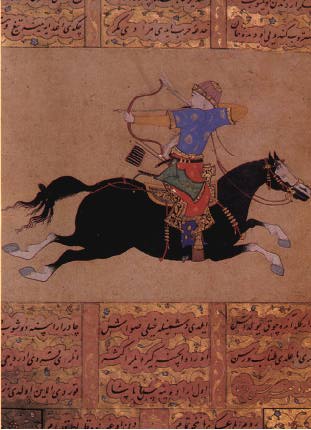
| Ottoman Horse Archer (Turkish Toxotes) - Atli Okcu |
| Centauro - raffigurazione medievale - Museo del Louvre |
| Centaur in Vézelay |
Saturday, August 31, 2019
PIE-Aneqo&Genu-versus-Turkish-Yanak&Çene
From the book "Vergleichendes Wörterbuch der Indogermanischen Sprachen;by
Fick, August, 1890"
In many Languages these 2 words are similar.
The author, August Fick, forgot to write at least two Turkish words for that: "yanak", cheek in English and "çene" for chin.
A List of all for a better comparison:
| Language | Chin | Mouth (Cheek) | |
| PIE | eneqo, aneqo | genus, geneva = Mouth * | |
| Irish | enech | kin | |
| OldIrish | enach | - | |
| Cymraeg | enep, gwyneb | gen | |
| Breton | enep | guen | |
| Sanscrit | Anika (Angesicht) | hanu | |
| Latin | - | gena | |
| Gothic | Kinnus |
-
| |
| German | Kinn | Wange (Cheek) | |
| Turkish | çene (read it like chen-eh) | yanak | |
| OldTurkish | iç-engek ** | yanggak, yingak | ** acc. to Tietze and Räsänen |
| Uigurish | ingäk | ängäk | |
| Chuvash |
-
| yanah | |
| Persian | çáne |
gune -گونه
|
Sunday, August 25, 2019
Yogurt-versus-Crowd
This is yogurt or yoghurt, that we know!
Original Turkish word for that is yoğurt. (ğ is called "soft g", please read it like "w" in English).
Etymonline says:
yogurt (n.)
also yoghurt, 1620s, a mispronunciation of Turkish yogurt, in which the -g- is a "soft" sound, in many dialects closer to an English "w." The root yog means roughly "to condense" and is related to yogun"intense," yogush "liquify" (of water vapor), yogur "knead."
*
I have not really objections but maybe a pair of extra infos:
I think Indo-Europeans knew these kinds of milk-products very early, earlier than 1620s. They had the word/verb below very long in their history. This is maybe a a kind evidence that the Turks and Indo-Europeans were good neighbors and not only the words they exchange but also the techniques for everyday life. Here below we can see the PIE root grutu- that is very similar to our yogurt in form and in meaning.
It is a very old Turkish word coming from the verb 'yo-ğ-' meaning to condense/to intensify. It has many older versions like yugrut-, yogrut-, &c.
This verb has many meanings and one of them is to press/to compress, like our Author August Fick wrote above (drängen, Bedrängung, Gedränge). And we can say at the end of our short article that modern English word "crowd" has to do with the Turkish word "yoğurt".
What do you think?
Uzunbacak Adem
Source: August Fick
Vergleichendes Wörterbuch der Indogermanischen Sprachen; 1890Pic: Wikipedia
Thursday, August 15, 2019
EarlyIrish-Suth-versus-Turkish-Süt
August Fick says Indoeuropean "su" means too squeeze (to press out).
Turkish verb sağ- (read it like sa with a longer a, like -su- ind English word sucker). The verb sağ- means "to milk" (melken). Similar? Same?
Early Irish suth means milk, Turkish "süt" means milk. Similar? Same?
*
And now as bonus an other SU word: hier it means in English good, welfare, well (like in wellbeing). It is a prefix.
There is a Turkish word sağ (read it like sa-a, look above).
It has many meanings. For example: good, welfare, alive, healthy and (right=opposite of left). It functions sometimes like a prefix, too, like by the words: sağacak, sağdıç, sağalmak, sağık, etc...
Sanscrit su- and Avesta hu- are very similar to Turkish roots to, even in Bashkir language we meet the häw with the same meaning.
Uzunbacak Adem
Pic: Wikipedia
Subscribe to:
Posts (Atom)
Pre-Greek-Arkane-versus-Tuerkic-arka
Pic: wiki * Ancient Greek ἀρκάνη/arkane means warp beam (a bar to which the threads of the loom are fastened). [1] Its is also called b...
-
The search continues. Below you will find names from antiquity and my suggestions from Turkish regarding their etymology. We keep on with ...
-
* Here below some Scythian and Thracian toponyms and andronyms that could have a Türkic etymologies: * Name Who/What Old Türkish equivalen...
-
One of the reliefs, very likely after a drawing by Yan Liben, at the Penn Museum. Here a general removes an arrow from the horse Saluzi (p...