Sunday, April 12, 2020

17IEwords-17TurkishWords


Bugün 17 benzer kelime.
Today 17 similar words.
Heute 17 ähnliche Wörter.
IndoEurpean vs. Turkish


IndoEuropeanMeaningTurkishMeaningOthers
zhansgoose, GansGaz, Kazgoose, GansKirchenslawisch: gasi; Oldirish: goss
zhothat, dieser şu (shu)that, dieserPRONOUN
totra, torthere, hereburada, orada, there, here

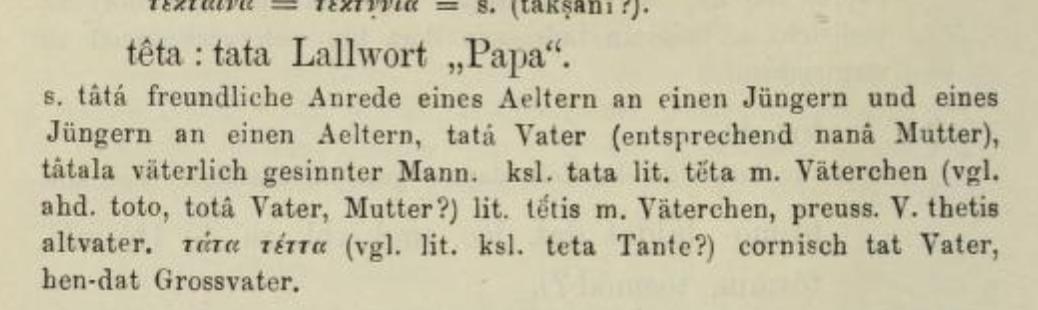
tataFatherataFather

temebeing darktamu Helltam: a dark room without windows(dam)
dapsacrificial mealdap/tapto worshipLatin templum?
demo/domoto build/housedamroom/houseDamokles: Höfling (Iç oglani), Courtier
dinoDay, dün/tünYesterday/Nightdün<=tün
deravaField cropdariField cropSetaria: Scientific name for sweet grasses
dhoina/dhenaMilking cowdanaCow’s daughter

dheroto stopdur-to stop

dhumo-ssmoke, Rauchdumansmoke, RauchLatin: fumus
dhvesto scattertozdust

dhvoro-scourt/courtyard/HofTavarassetsRussian Tovarish: Business Mate
pekoto cookpiş-to cook/to be mature

peleçu-sAxebaltaAxein many langs this word is similar
pelu/pelvPelvis,BeckenBelPelvisBel: Turkish for Sperma


Uzunbacak Adem


Saturday, April 11, 2020

15IndoEurpeanWords-15TurkishWords

I think, I have neglected my blog.
But now I am back with 15 words chosen by me!
15 Indo European words cognating 15 Turkish (and more) words.


IEmeaning TURKISHmeaningOthers
Oç, açto sharpen, schärfentop, Spitze

ul, ulusto howl, heulenulu-to howlUyghur Turkish : Holi-
kaçvo-ssmall, kleinküçüksmall, klein

k’erpoto cut, schneidenkirp-to cut, schneidenLithuanian kirp: to cut
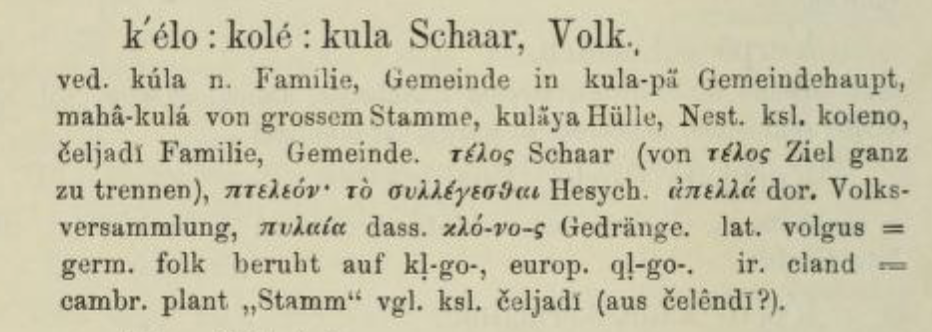
k’elo, kole, kulaFlock, People, Schaar, Volkkul, köleSlave, Sklavekül-: to tie the feet & hands
kotihow many, wie vielekaçhow many,Latin: quot
kotitho-sder wievielte?kaçincider wievielteNo direkt English word
k’is, k’idwho, were, what, waskimwho?Vedic: kim=who
kjoyo-s, kjoimo-sHeim, Homeüy (ev) home, heimGreek oikos: Farmhouse
gru’sheavy, schweragirheavy, schwer
Latin gravis, grauis
gioBowstringyayBowstringOld Turkish version: ya; Avestan: jya
ghouro-sterrible, furchtbarKork-to be afraid

çap> Kapto touch, to graspkap-to grasp, kapa: to close (the door)Latin: capio
çerato hurt, versehren, verletzenyara (n), yarala-(verb)wound, to hurtLatin: cari-es,
zhenulower jaw boneçeneLower jaw bonethe roots in Turkish çang-, çege- va´have to do with ‚to speak‘


That' all today!

Have a nice time...

Uzunbacak Adem

Source:


Sunday, March 29, 2020

Are-Janissaries-the-last-Jedis?


S/he who wrote this, guesses. 
S/he is not sure.

But I think, this wiki-writer forgot a troop as model (idol) for Jedi-Knights. I can add them now! I can guess, too!

In my opinion we should give a chance to Janissaries, the elite troop of the Ottoman Turks fighting on the side of the Sultan in war and serving him as guards in peace.

Let's begin to compare the Jedi and the Janissary:

1. Jedi and Janissary are monastic, that means they had a strong religious life, yoga, meditation, religious discipline (force?), celibate

2. They are both academic, that means a hard school life mit strict discipline and order (see Enderun "acemi oğlan" school),

3. Both are meritocratic, that means they mustn't have had wealthy parents or a higher caste. It was enough to be smart and talented to get the chance for the highest rank.

4. Jedi and Janissary are paramilitary forces, that means their first duty is not to fight. Jedi Knights can fight but their primary duty is being guardians of peace and order, like Janissary guarding Sultan and acting like -in peaceful times-, for example, fire fighters. Later on in the history the Janissaries were the army itself.

(Wiki: paramilitary is a semi-militarized force whose organizational structure, tactics, training, subculture, and (often) function are similar to those of a professional military, but is not formally part of a country's armed forces.[1])

5. Both are open for all races, colors, identities. An important point, I believe.
All were melting in the identity of the troop.

These were the 5 main similarities between Jedi Knight and Janissaries.

*

And now to other points and a little bit explanations for the points above:

The children were 'adopted' or "recruited' very young, brought to the their new families mostly from Balkan Lands, South Russia, Armenia.
That shows us that no physical appearance made a difference, all were brothers, like the Jedi. 
There are many races, colors, sizes in the Jedi 'Troop', too. This point is very important, I believe. Because it is a basic specialty of Janissaries like of the Jedi.
They were too young to remember their 'real' families, unlike Anakin, who chose the Dark Side, because he knew his mother and this was his first step towards Emperor. 

Celibate is an other significant similarity between these two: 
They may not marry and have children. 
We know what happened, as Anakin and Padme married and got children.

Lack of Possession is another similarity between Jedi and Janissary (no trade).

Both of them had unique uniforms. And these are similar, too. They were both distinctive.
I drop two pics below, you can compare. 

They were both close-knit societies, that means they were themselves their families.
Janissaries called them 'Brotherhood of the Spoon', every unit had its 'kind of spoon" (metal or wooden spoon, or shape or the color of the spoon may have been "different)
Wiki: "brotherhood of the spoon", which reflected a sense of comradeship among the Janissaries who ate, slept, fought and died together.[11]"

These spoons are maybe the grandfather of the badges of the Football Clubs (Idea of Miksch, Hans: in his book 'Der Kampf der Kaiser und Kalifen')

Both love "sabers" and dislike fire weapons. 
It is not a lightsword, no!, it is a lightsaber what Jedi attaches to his belt.
Sabers have their roots in Middle Asian/Turkish culture and in 'Western' culture zone the sabres are associated with the Turks. 
Janissary had always his 'Atakan' (Yatagan) attached to his belt like Jedi his lightsaber.

Ok, after all these points, I think, I can say, the Jedi could have some "elements and ideas" from the Janissaries.

In Star Wars Saga there are many more points in this context that I will write about.
Stay tuned!

A nice Sunday!

Uzunbacak Adem


Obi-Wan Kenobi's Jedi robes from Episode IV


-A Turkish Janissary-Gentile Bellini-

Pics: wikipedia


Friday, March 20, 2020

Halo-Hale-Ayla-Ayat

Buddha with Halo-Haleli Buda


Hello, 

a fairly long blog today about HALO.

Halo=> (acc. Etymonline.com)

"1560s, "ring of light around the sun or moon," from Latin halo (nominative halos), from Greek halos "disk of the sun or moon; ring of light around the sun or moon" (also "disk of a shield"); ""threshing floor; garden," of unknown origin. The sense "threshing floor" (on which oxen trod out a circular path) probably is the original in Greek. The development to "disk" and then to "halo" would be via roundness. Sense of "light around the head of a holy person or deity" first recorded 1640s. As a verb from 1791 (implied in Haloed)." (the underlines belong to me- UA)

Wikipedia says: 

"Etymology

From Latin halōs, from Ancient Greek ἅλως (hálōs, disk of the sun or moon; ring of light around the sun or moon; threshing floor with its surrounding threshold; disk of a shield); itself of unknown origin, see هلال‎ (hilal-UA) and תהילה‎. Used in English since 1563, sense of light around someone’s head since 1646."

We see here, the word HALO (old form Halo-s) means two similar but in fact different things:
Halo means: A light disc around something AND a threshing floor (Turkish: harman yeri)

Wiki says: 
"A threshing floor is of two main types: 1) a specially flattened outdoor surface, usually circular and paved,[3] or 2) inside a building with a smooth floor of earth, stone or wood where a farmer would thresh the grain harvest and then winnow it. 

Now I am coming to my hypothesis:

In Turkish there is a root: 

AY

Ay (n) means the moon, 
Ay- (v) means to turn, to make rounds. 

AYLA (read it like eye-la) means 1:1 HALO (read it like hey-lo; hāʹlō) Their sound and meaning are very similar, when not the same.

Ayla-k means: he who has nothing to do and hangs around (similar to verb eylen-). 

Ayat (my mother from Balkan would call it HAYAT) means: Front yard, dooryard (German Vorgarten) a place you should surround with a fence, wall, etc. (Other Turkish word is avlu) You see by 'ayat' this root ay-, too, meaning surrounded place in front of a house, like a halo.

Now my explanation after so much info:

Ok! Ay (the moon) may/could/should have something to do with with verb ay- (to turn).
Every word we have in Turkish language with AY to do with something round, like halo, like threshing floor. 

And now HALO: I believe, this word with an unknown etymology has/must have to do with the Turkish word ay (the moon).
Ay in Turkish means moon and is round and it is bright, glossy and shiny.

I could say Ayla is the mother of the word halo in English and hale in Arabian, both meaning a disk around the head of holy people/deities, too. 

The other root ay- (verb) could be the mother of the other HALO meaning threshing floor

Both AY and AY- are very old Turkish words/verbs.

And now (sorry it is very long) to explanation for the halo of the holy people:

Kazim Mirsan says that it is a sign that gives the person, who has it around his/her head, a "success". He says s/he is accepted as a successful personality (In western world Halo means glory).   
The halo sign is derived from the Turkish Tamga 'O' (namely ONG = Latin Letter 'O').
ONG means according to Kazim Mirsan success/successful.

Uzunbacak Adem


Babür Türkü Cihangir - Mughal Jahangir 

Ra with solar disc

Last Supper with 12 halos, Judas Iscariot have no halo

pics: wikipedia

Monday, March 16, 2020

2WordsDealingWithHorse-SHAGREEN-SHABRACK

Hello from a nice March morning!

I work on 2 words of Turkish origin dealing with "horse" in many European languages.

* Shabrack
an
* Shagreen

And now our first word:

English Shabrack (or Shabraque) meaning saddlecloth is derived from Turkish "Çaprak" meaning saddlecloth, from the verb çap- to saddle. It doesn't have only a protective function but also decorative and advertising functions like membership to a clan or unit.

Polish: Czaprak,
Slavish: Чапра́к, Чeпра́к, Чапрaк, 
Swedish:  Schabrak


Two other meanings we have in German language:

Schabracke is a contemptuous word for women (We don't need here pics, I believe).

And Schabracke is word for a window deco in German (look at the pics below).


*

And now to Shagreen:

Maybe you know the book of Balzac "La Peau de chagrin", English "The Skin of Sorrow".
This French chagrin (meaning sorrow has most probably to do with the Turkish word "sağrı", a kind of rough and raw leather. (According to wikipedia: "The roughness of its texture led to the French meaning of anxiety, vexation, embarrassment, or annoyance").

But now directly to our word Shagreen:

It is a word for rough and raw leather, gained from a horse (later from other animals like stingrays, too)

Turkish word "sağrı" meaning "the rump of a horse" (and of course the sort of leather gained from that) is the original word of all European words like

Chagrin, Shagreen, Segrijn, Szagryn.

It is this rough and raw leather we take for many productions like hardback books, handle of knives, or as protecting cover for boxes, etc...

Look at these pics below (source Wikipedia):


White handle is covered with Shagreen


Like Mario Alinei said: There are many terminological words from the horse-taming and horse-riding culture of Turks in other languages.


Uzunbacak Adem

Thursday, March 12, 2020

Sicilian-sceccu-Turkish-esek

A Sicilian - Turkish connection :)

Sicilian word 'sceccu' means donkey.

Pronunciation=>ˈʃɛk.ku
Okunuşu: şekku


It is used for the people who were not good at school or ignorant.

It is derived from Turkish eşek, meaning donkey.
Turks use it for the people who are not clever.

There is a superlative form eşşoğleşşek in Turkish, meaning simply idiot.

Uzunbacak Adem


Esek-Sceccu-Sicilya-Sicily-Sizilien-Siciliano


Sicilian Flag - Bayrak Sicilya 

pics: Wikipedia

Continuity-of-Scythian-Tuerkic-traditions-three-strands-of-mane

  One of the reliefs, very likely after a drawing by Yan Liben, at the Penn Museum. Here a general removes an arrow from the horse Saluzi (p...